
Expert Care to Help You Return to Tennis with Confidence
Tennis is a highly demanding sport that requires speed, agility, coordination, strength, and endurance. The repeated movements involved in serving, hitting, sprinting, changing direction, and reaching for shots place significant stress on muscles, tendons, joints, and ligaments throughout the body. While tennis provides excellent physical and mental health benefits, these repetitive demands can sometimes lead to injury.
Whether you play competitively, participate in local tournaments, or enjoy recreational matches, an injury can affect both performance and enjoyment of the game. Pain, stiffness, weakness, and reduced mobility can make it difficult to train, compete, or even perform everyday activities comfortably.
At Vitaphysio, our Tennis Injury Treatment service focuses on identifying the underlying cause of symptoms and providing personalised rehabilitation programmes that support long-term recovery. Our goal is to help players recover safely, improve physical function, and return to the court feeling stronger and more confident.
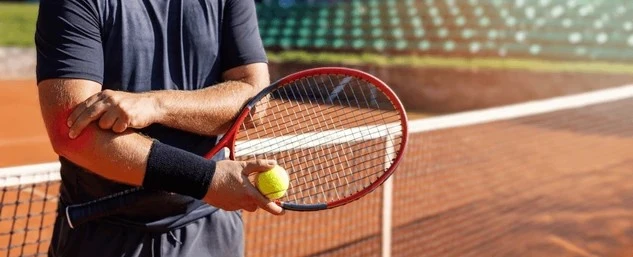
Understanding Tennis Injuries
Tennis requires repeated movements that place stress on multiple areas of the body. The shoulders, elbows, wrists, back, hips, knees, and ankles all work together to generate power, maintain balance, and support movement during play.
Injuries may occur suddenly due to a fall, awkward movement, or overextension. However, many tennis injuries develop gradually over time as a result of repetitive strain, excessive training loads, poor technique, inadequate recovery, or muscular imbalances.
Without proper treatment, minor symptoms can become ongoing problems that affect performance and increase the likelihood of further injury. Early assessment and rehabilitation often play an important role in achieving a successful recovery.
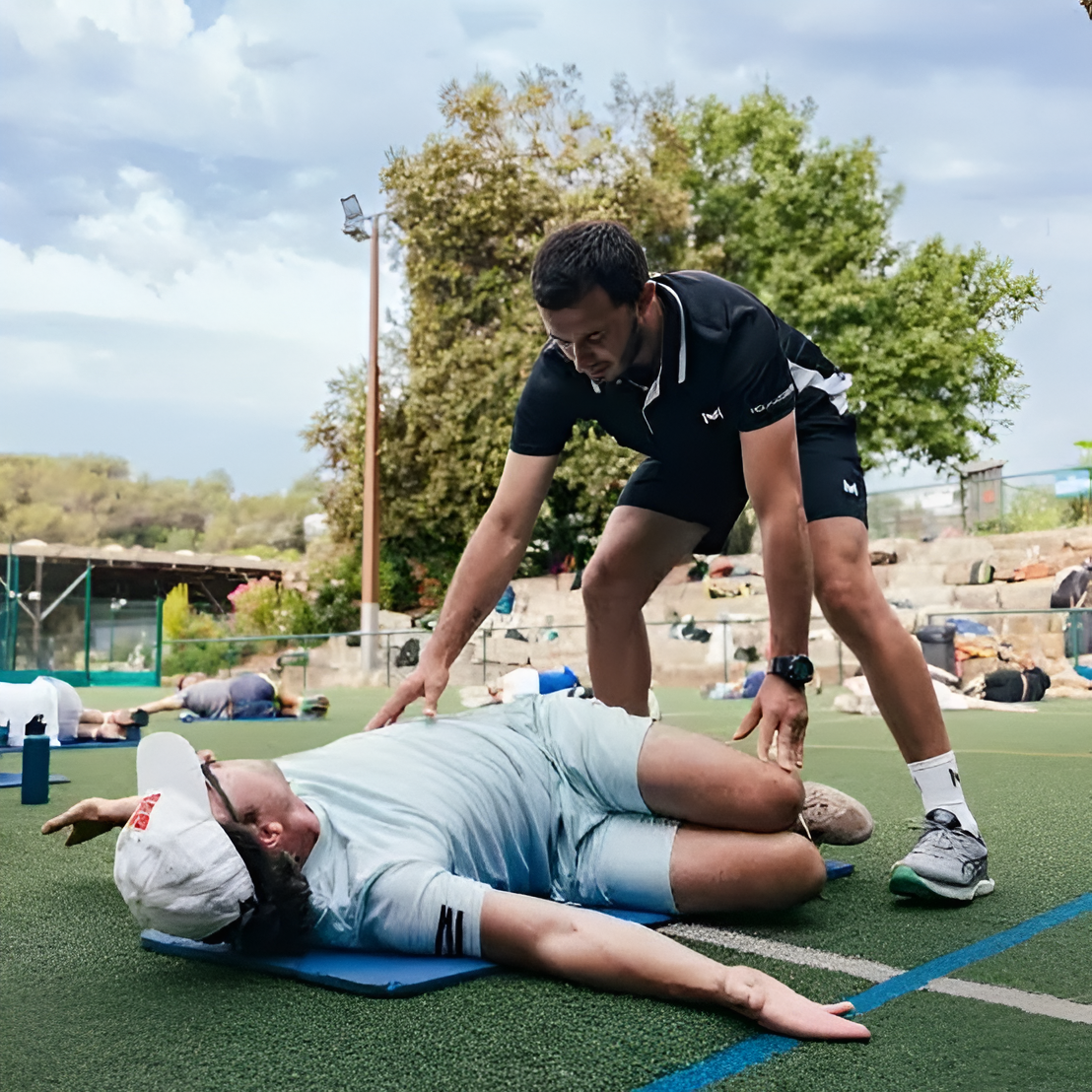
Common Tennis Injuries
Tennis players can experience a variety of injuries affecting both the upper and lower body.
Common conditions include tennis elbow, shoulder tendon irritation, rotator cuff injuries, wrist pain, lower back discomfort, knee pain, Achilles tendon problems, calf strains, ankle sprains, and hip-related conditions.
Many of these injuries are associated with repetitive movement patterns and the physical demands of the sport. Identifying the exact source of pain is essential for creating an effective rehabilitation programme.
A thorough assessment helps determine the contributing factors and ensures treatment targets the root cause of the problem.

Comprehensive Assessment and Diagnosis
Every rehabilitation programme begins with a detailed assessment.
During your appointment, your physiotherapist will discuss your symptoms, playing history, training schedule, injury history, and personal goals. A physical examination is then performed to evaluate joint mobility, flexibility, strength, posture, balance, and movement patterns.
Where appropriate, sport-specific movements may also be assessed to identify technique or biomechanical factors contributing to the injury.
This comprehensive approach helps create a personalised treatment plan that addresses both current symptoms and future injury prevention.
Personalised Treatment and Rehabilitation
No two tennis players are the same, and no two injuries require exactly the same treatment approach.
Depending on the nature of your condition, rehabilitation may include manual therapy, soft tissue treatment, mobility exercises, flexibility work, strengthening programmes, and movement retraining. Treatment focuses on supporting recovery while gradually restoring normal function and physical performance.
As rehabilitation progresses, exercises become more specific to the demands of tennis, helping players prepare for serving, hitting, running, and rapid directional changes.
Regular progress reviews ensure that treatment remains aligned with recovery goals.
Benefits of Tennis Injury Treatment
Professional rehabilitation offers several important benefits:
- Reduced pain and improved mobility
- Enhanced strength and physical performance
- Reduced risk of recurring injuries
- Greater confidence when returning to tennis
These benefits help players recover effectively while supporting long-term participation in the sport.
Restoring Strength and Movement Quality
Following an injury, it is common for muscles to become weaker and movement patterns to change. Protective behaviours often develop subconsciously, leading to compensation strategies that place additional stress on other areas of the body.
Rehabilitation focuses on restoring strength, improving flexibility, and correcting movement dysfunctions that may contribute to pain or reduced performance.
This structured approach helps players regain normal function while supporting more efficient movement on the court.
Returning to Tennis Safely
One of the most important aspects of rehabilitation is ensuring a safe return to tennis. Returning too soon can increase the risk of reinjury and prolong recovery.
A progressive rehabilitation programme helps prepare the body for the physical demands of training and competition. Strength, endurance, balance, coordination, and sport-specific movements are carefully developed before full participation resumes.
This gradual progression allows players to rebuild confidence while minimising unnecessary risk.
Why Choose Professional Tennis Injury Treatment?
Tennis injuries can affect performance, confidence, and enjoyment of the game. Professional physiotherapy provides expert guidance throughout the recovery process, helping players understand their condition and progress safely through rehabilitation.
Through evidence-based treatment and personalised care, patients receive the support needed to restore physical function and return to tennis with confidence.
Preventing Future Tennis Injuries
Injury prevention forms an important part of long-term tennis performance. Many injuries are linked to factors such as training errors, inadequate recovery, poor movement mechanics, muscular imbalances, or weaknesses within the kinetic chain.
By identifying and addressing these issues, rehabilitation can help reduce future injury risk and support more consistent participation in the sport.
Education regarding warm-up routines, recovery strategies, strength training, and movement efficiency also contributes to long-term success on the court.
Get Back on the Court Stronger:
An injury does not have to keep you away from the sport you enjoy. With professional assessment, targeted treatment, and structured rehabilitation, it is possible to recover effectively and return to tennis with improved confidence and physical performance. Taking action early can help reduce recovery time, minimise future injury risk, and support long-term success on the court.
Frequently Asked Questions
What is tennis elbow?
Tennis elbow is a condition involving irritation of the tendons on the outside of the elbow, often caused by repetitive arm and wrist movements.
Can physiotherapy help tennis-related injuries?
Yes. Physiotherapy is highly effective for many tennis injuries and can support recovery, strength, and injury prevention.
How long does tennis injury rehabilitation take?
Recovery time varies depending on the injury type, severity, and individual circumstances.
Will I receive exercises to complete at home?
Yes. Home exercises are commonly prescribed to support ongoing recovery and improve treatment outcomes.
Can physiotherapy help prevent future tennis injuries?
Yes. Rehabilitation often includes injury prevention strategies that focus on strength, mobility, movement quality, and training habits.
与我们联系

- Suite 407/160 Rowe Street, Eastwood NSW 2122
- Hours: Mon-Fri: 9AM-6PM, Sat: By Appointment